
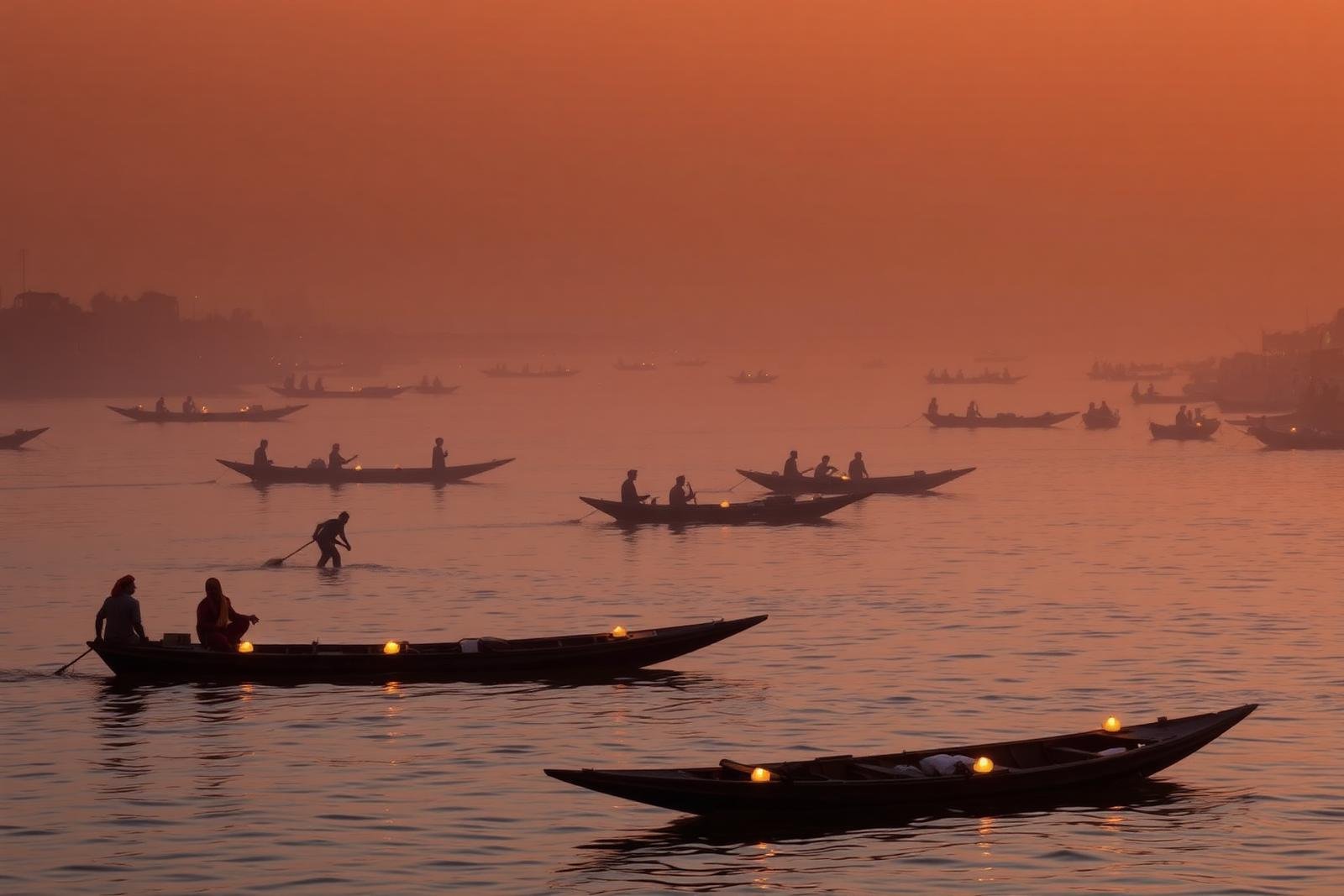
Hajipur
Konhara Ghat, where the Sandals meets the Ganga — the Harihar Nath temple attributed to Rama, the November Sonepur Mela across the water, one of Asia's largest cattle and elephant fairs.
6th Century BCE · Bodh Gaya
A prince sat down beneath a peepal, resolved not to rise until he understood suffering. The descendant of that tree still stands behind the Mahabodhi temple — a UNESCO World Heritage Site — and at 5am the gates belong to prostrating monks from a dozen countries. We go before the gates get busy, walk the Thai, Bhutanese and Japanese monasteries that ring the town.
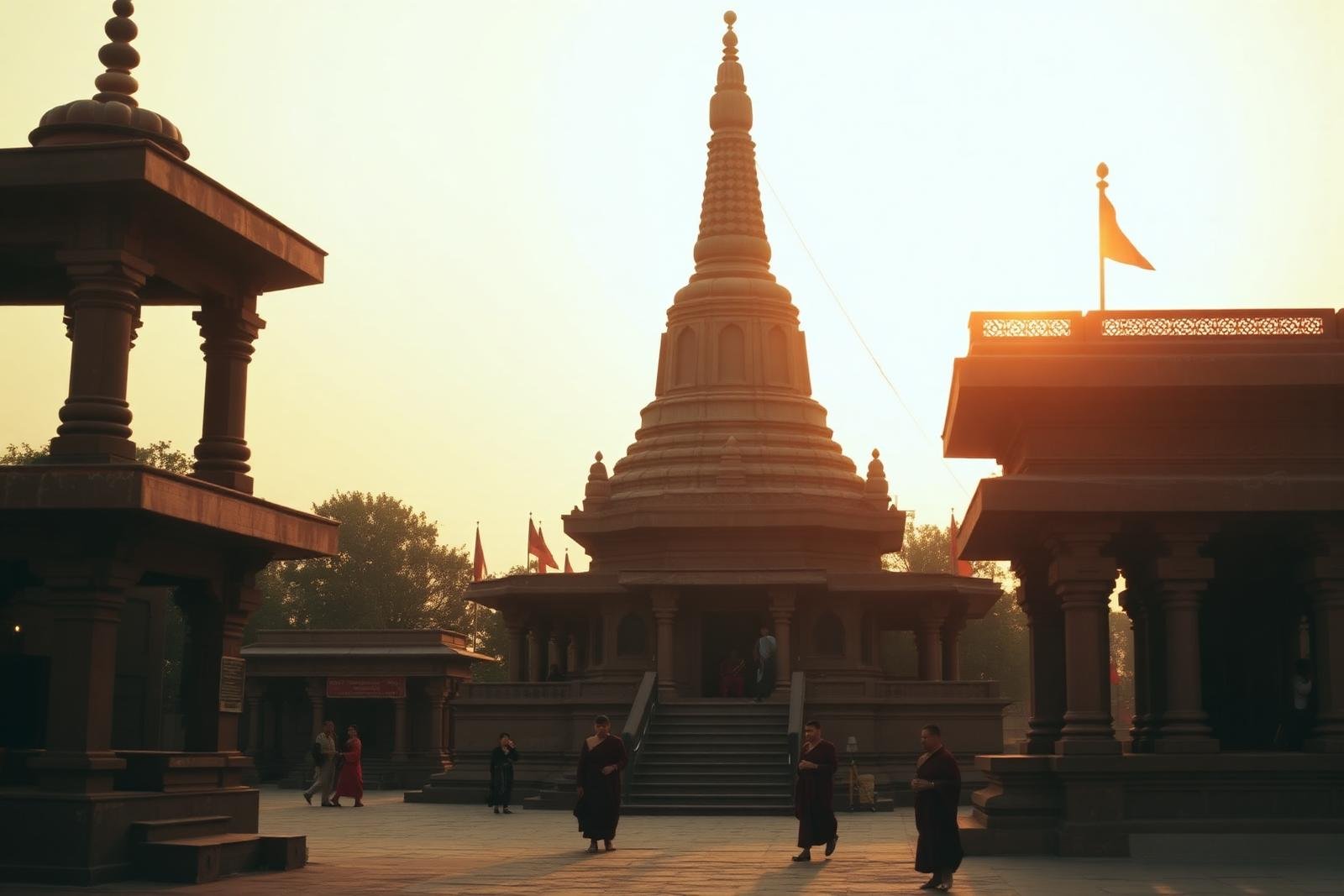
Mahabodhi Temple Complex, Bodh Gaya
c. 500 BCE · Vaishali
Long before kings were fashionable, the Licchavis of the Vajji confederacy governed Vaishali by assembly — historians call it the earliest republic on earth. The Buddha preached his last sermon here and announced his passing; Ashoka marked the spot with a single polished sandstone pillar crowned by a lion that still stands beside the Kolhua stupa and the Ramkund tank.
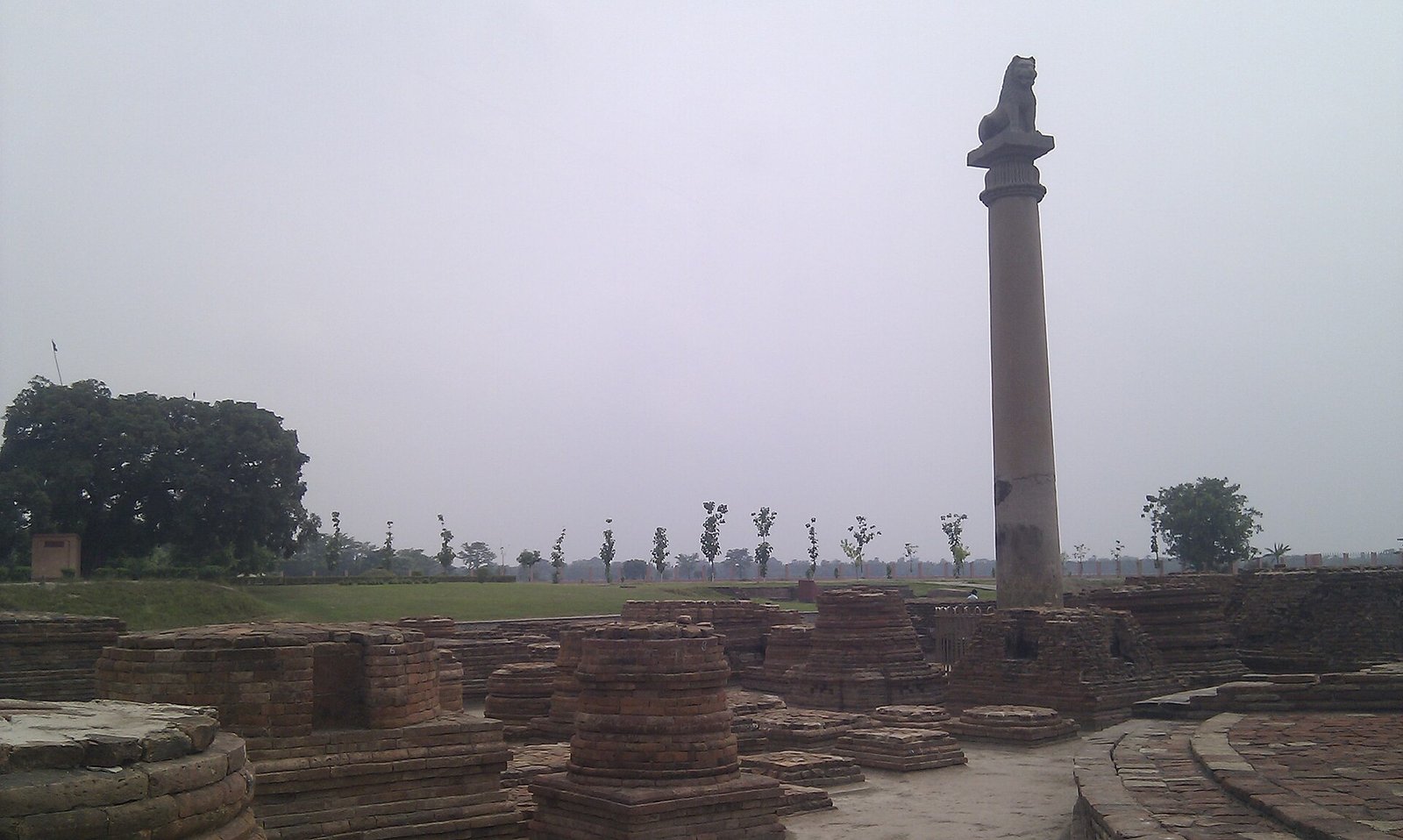
Ashokan Lion Pillar at Kolhua, Vaishali
5th Century BCE Onward · Rajgir
Rajgriha was Magadha's first capital, ringed by five hills and a cyclopean stone wall you can still trace. The Buddha taught the Heart Sutra on Gridhrakuta — Vulture's Peak — and after his death five hundred monks recited the entire canon from memory in the Saptaparni caves. Add the Jain temples of Vaibhargiri, the Brahmakund hot springs and the ropeway to the Vishwa Shanti Stupa at sunset.
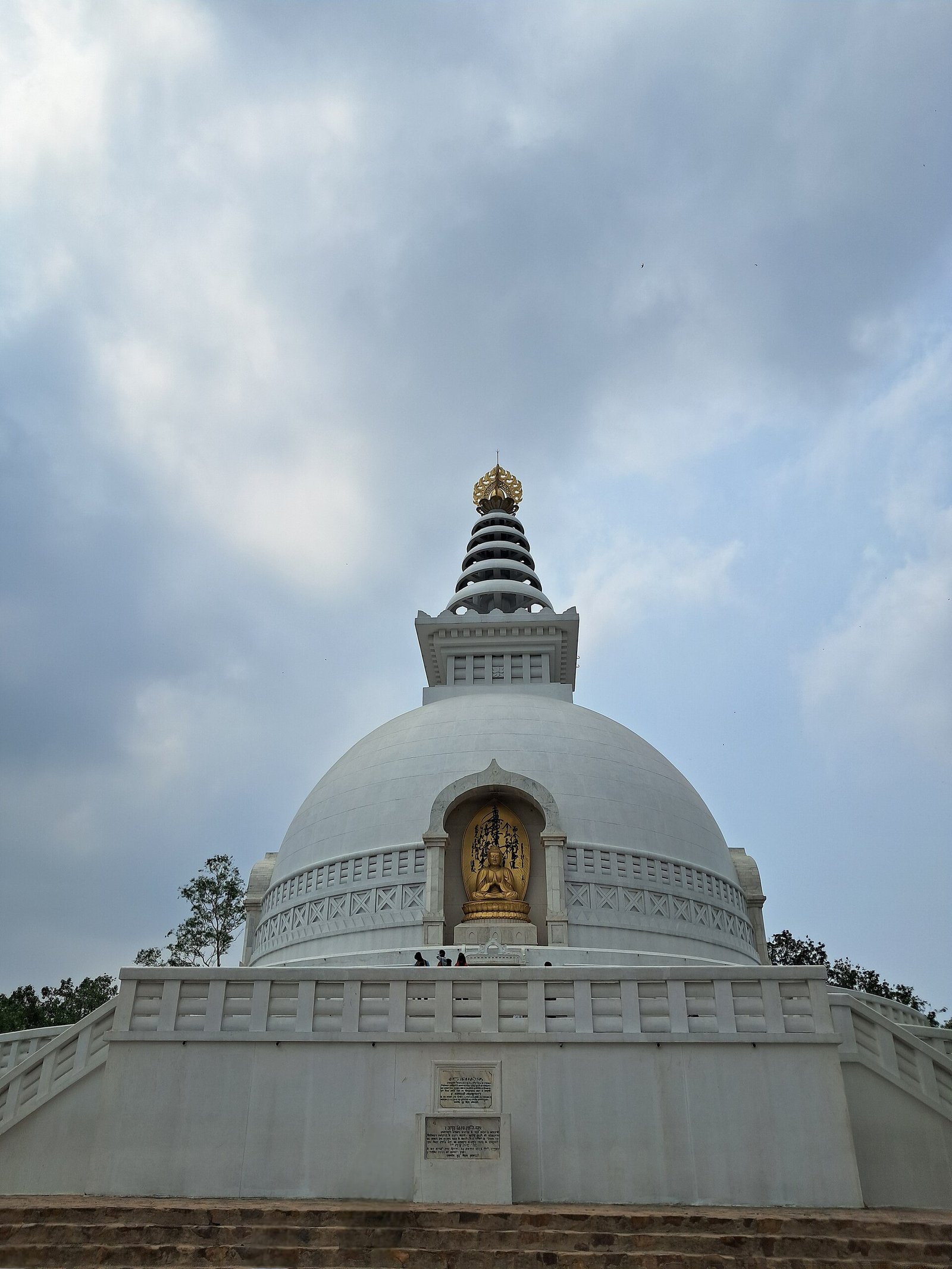
Vishwa Shanti Stupa above Rajgir
5th–12th Century CE · Nalanda
Ten thousand students, two thousand teachers, entrance examinations at the gate, and a library said to have burned for months. Walking the brick courtyards and the Sariputta stupa of Nalanda Mahavihara with a Buddhist scholar — with Xuanzang's seventh-century account in hand — makes the scale legible in a way no photograph does.
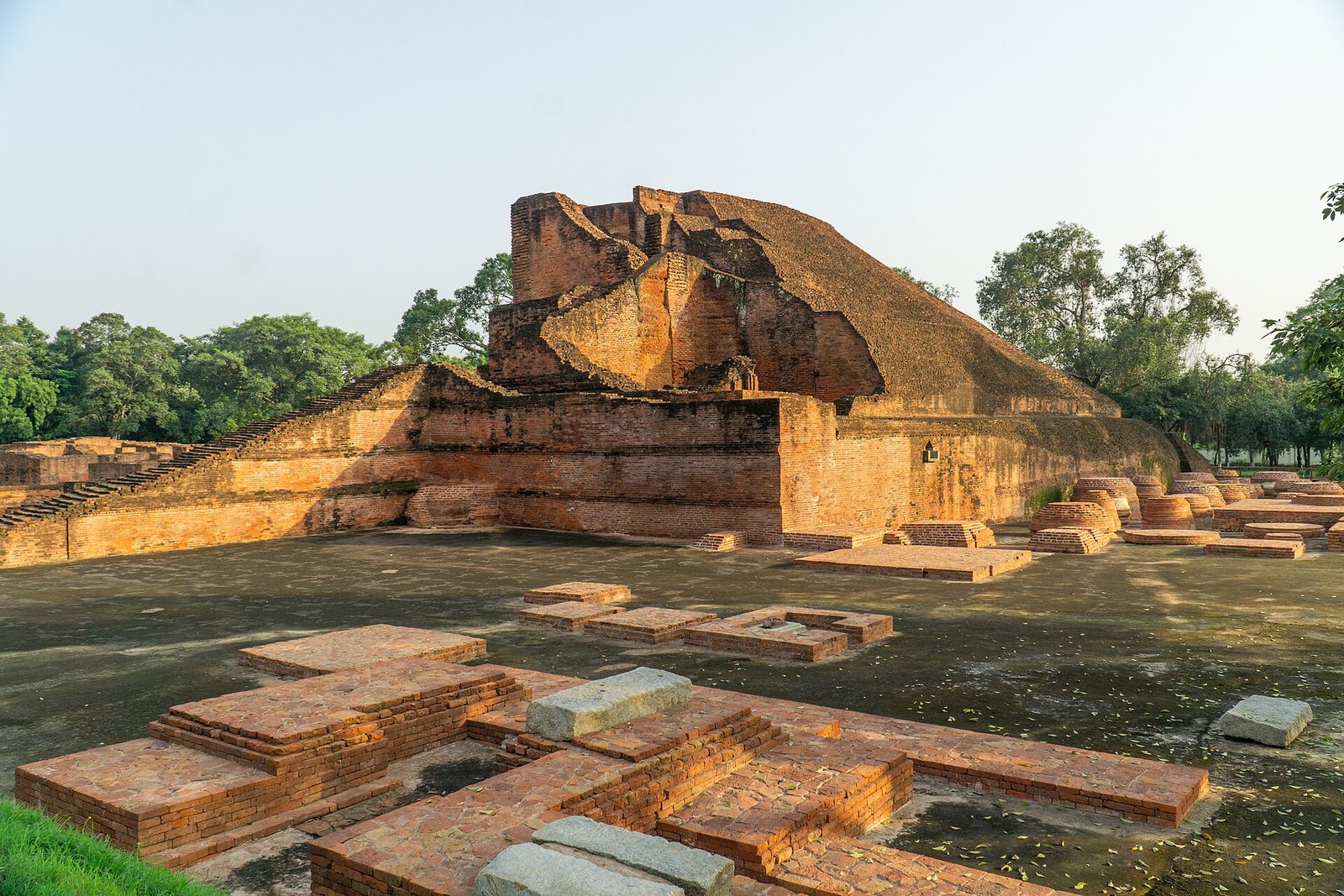
Sariputta Stupa, Nalanda Mahavihara
Living Tradition · Mithila
Madhubani began as ritual wall painting for weddings — fish for fertility, the sun, Sita's marriage in Janakpur. An afternoon in a Mithila artist's courtyard, learning the double-line kachni fill and the bharni colour block with a bamboo nib, soot and ochre pigment.
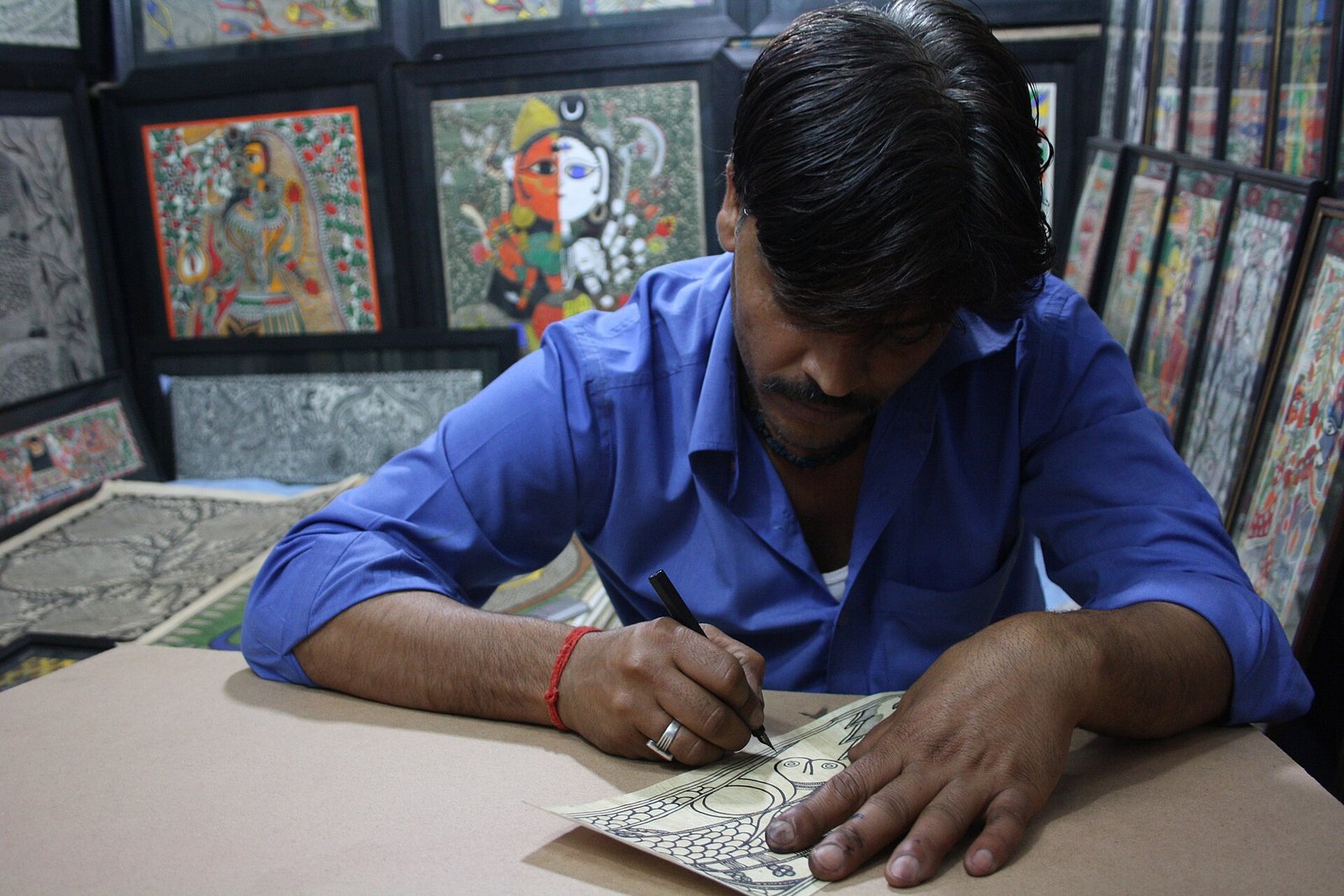
A Mithila Artist at Work
Also on this Route
Konhara Ghat, where the Sandals meets the Ganga — the Harihar Nath temple attributed to Rama, the November Sonepur Mela across the water, one of Asia's largest cattle and elephant fairs.
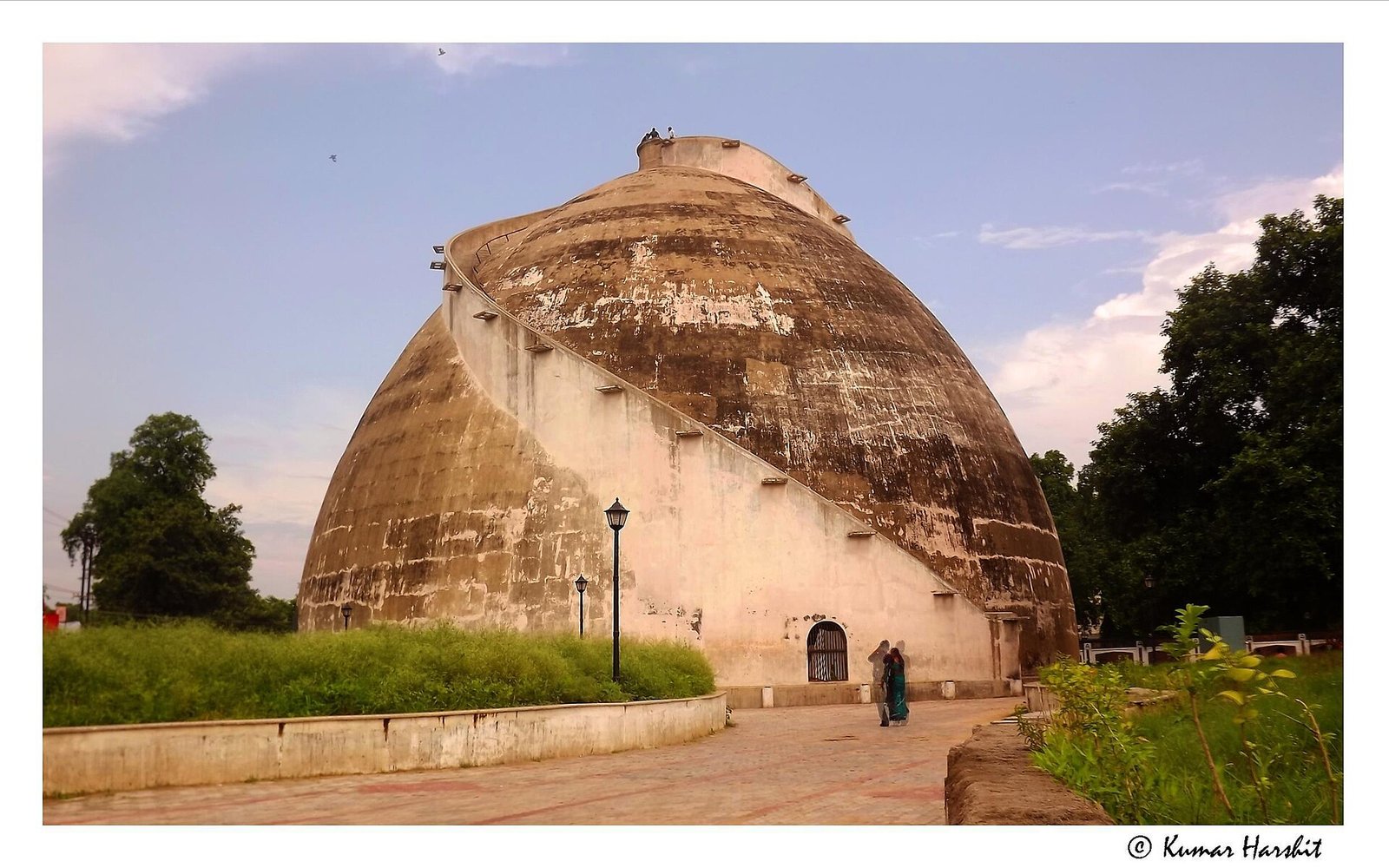
Pataliputra under a modern city: the Didarganj Yakshi's mirror polish in the Patna Museum, Khuda Bakhsh's Mughal manuscripts, Sikhism's Takht Sri Patna Sahib, and a quiet climb over the river.
The tallest Buddhist stupa in the world rising out of a Champaran field, and the Lauriya Nandangarh Ashokan pillar standing where it was raised in the third century BCE.